
Photo by Hendrik Morkel on Unsplash
This is my light one-night setup when I want to move fast, sleep outside, and still have a night that feels good rather than stripped to the bone. It is quite simple, and based on two iterations. The more I do short overnights, the more I want to pack for the exact trip in front of me instead of packing for every hypothetical problem. It’s about staying light while still protecting comfort and enjoyment:
- a real pillow
- a pad I can comfortably sleep on
- enough shelter to feel calm if conditions shift
- enough small extras that the trip still feels fun
For me, this is the kind of setup that makes sense for:
- summer or mild shoulder-season conditions
- decent weather windows
- routes where I care more about moving than camp luxury
It is not a deep-cold setup, and it is not the kit I would want for a long wet forecast.
Item Breakdown
These are the actual buckets I think about when I pack:
Sleep Gear
This is the core gear, and I got a mix of expensive professional gear, and affordable items that are almost as light as the very expensive ones.
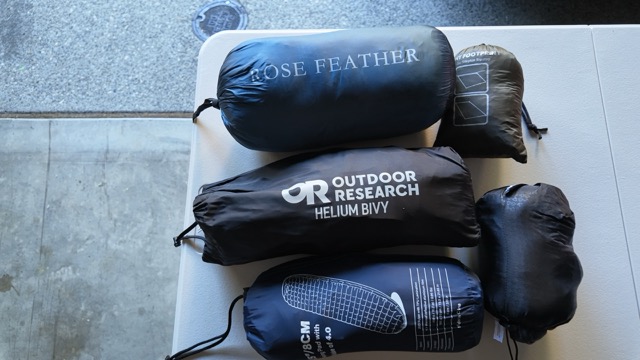
I want this category to stay simple but non-negotiable:
| Item | Weight (oz) | Weight (g) | Notes |
|---|---|---|---|
| Onewind Ultralight Tent Footprint / tarp | 9.3 |
263.7 |
Simple tarp / groundsheet piece |
| Hikenature Ultralight pad | 15.0 |
425.2 |
Main pad |
| Outdoor Research Helium Bivy | 15.8 |
447.9 |
Bug and weather protection |
| NEMO Fillo pillow | 9.2 |
260.8 |
Worth it for sleep quality |
| ROSE FEATHER quilt | 17.5 |
496.1 |
Main insulation |
When starting camp: When it comes to finding a spot, I keep some distance to my friends in case they snore. Then, find a flat spot, clean it out, and also attach your headlamp so you’ll be able to see later.
Once a spot is found, put the tarp on the ground, and staking it in, so that it stays in place. Then start with food preparation, and while this keeps lay out the Bivy sack, blow up and put the pad, quilt, and pillow inside. Also, add toiletries like glasses, and the dry back with technology, at the top of the sack.
Another to do is: Keep my AirPods close for the night, start charging my devices (Apple Watch) right away, and switching into comfy shoes.
Clothing
I try to keep clothing brutally practical and tied to duration.
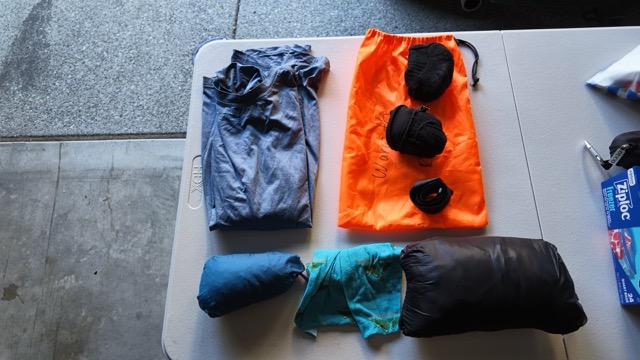
For a short fastpack, that usually means:
What I wear when I leave the car:
- Top: shirt + running hat + sun glasses
- Legs: sport boxershort + running shorts
- Feet: running shoes + toe socks
- Tracking: Watch + iPhone
- Backpack + car keys in drybag
- Chest flasks: water/electrolytes, Alanie
In the pack:
- rain protection (Houdini)
- warming system (gloves + buff)
- puffer jacket
- one lightweight t-shirt for any day
- exact sock count for any day
- exact boxer count for any day (“flip”)
One Day of Food
I tried hot food first but the setup is too heavy. Some dishes like potato mash, instant oats, and ramen noodles can be prepared with cold food. Hence, the items I rely on:
- Katadyn water filter
- plastic water bottle bag
- foldable bowl with lid
- large spork
- little towel
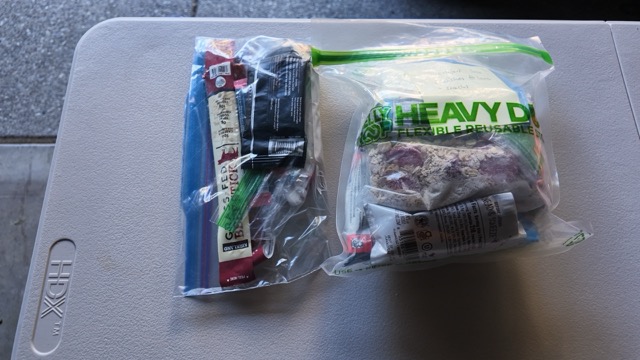
For nutrition, I pack two bags for each full day +1 of each in a smelly proof reusable plastic bag:
Pack 1: Trail snacks on the run
- 2x Alanie powder, 2x Electrolytes
- Salami, candy bar, salt tablets, Ketones
Pack 2: Meals at camp
- 1x breakfast at 800 calories: instant oats, nuts, freeze-dried fruits, milk powder, salami+taco
- Two main dishes at 1000 calories:
- example dish 1: potato mash, chicken pouch, bacon cubes, 2x tacos, peanut butter, cholula
- example dish 2: ramen noodle pack, tuna puch, 2x tacos, peanut butter, cholula
- And each an extra (2x tacos, peanut butter, powerbar) as backup.
As one can see the actual food style, prefers simple grocery-store backpacking food over anything too fancy. I wrote that up separately in Backpacking Meals From a Grocery Store.
Toiletries
This is where extra weight sneaks in if I am not paying attention.
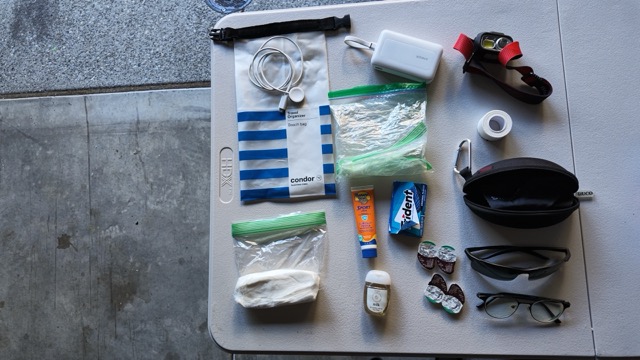
The goal here is tiny versions only:
- chewing gum
- one container: sun glasses + normal glasses + 2x contact lenses set (1 extra per day)
- sunscreen
- sanitizer
- tape
- wet toilet paper + extra bags for storing
- mosquito spray
Pack and Seat
This is the part that makes the whole thing feel fast instead of like regular backpacking.
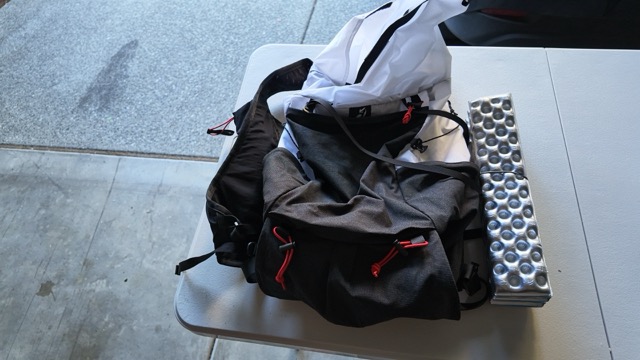
The pack should stay small enough that it encourages discipline.
The Big Picture
The system is built around a few simple choices:
- a light fastpack
- a tarp plus bivy
- a light quilt and pad
- limited spare clothing
- no unnecessary duplicates
That keeps the weight low without turning the overnight into a deprivation contest.
This is where a lot of “light” kits secretly become heavy, so I try to keep this category disciplined without deleting the small things that make the trip run smoothly.
Camping Notes That Improved the Experience
- Sleep away from other people if possible. It makes a huge difference for snoring, random noise, and general camp chaos.
- Keep AirPods next to me when I sleep.
- Flip the mattress so the black side is on the ground.
- Pack differently for different trips: a family hike with cooking is a different system than a one-night or two-night fastpack.
These are small things, but they changed the quality of the overnight more than a lot of gear purchases.
What I Intentionally Leave Out
- no sleeping bag liner
- no hiking poles for this setup
- no hot cooking kit
- no Kindle, because the iPhone is enough
- no games
- no oversized toiletry or first-aid clutter
The more I trim these categories, the more this setup actually feels like fastpacking instead of regular backpacking squeezed into a smaller bag.
What This Setup Is Not
This is not the setup I would choose for:
- a cold alpine forecast
- sustained rain
- trips where I want a lot of camp comfort
- trips where I expect to spend more time sitting than moving
In those conditions, I would scale up rather than pretend every trip should be solved with the same tiny kit.
Final Take
What I like most about this setup is that it feels intentionally light, not accidentally incomplete.
At roughly 10 lb it is light enough to feel fast, but still complete enough that I can sleep, recover, and actually enjoy the night.
That is the balance I care about most: light enough to move well, comfortable enough to want to do it again.