This is actually one of my favorite ways to backpack.
You can often eat better, cheaper, and lighter than if you buy only Mountain House meals, and a regular grocery store like Safeway has almost everything you need.
I also do not mind eating a bit lighter on shorter trips, even if it means I burn more than I replace. I would rather carry food that feels good, stays simple, and keeps pack weight down than force myself into full thru-hiker calorie mode for every section.
For a hard section like Section J, I can easily imagine burning 4,000 to 6,000 calories per day with a full pack, but I do not necessarily try to replace all of that. On a shorter section, I am comfortable running a deficit if it means the food bag stays smaller and the meals feel better.
The basic idea is simple:
- Use cheap carbohydrate bases
- Add shelf-stable protein
- Use fat selectively rather than automatically
- Keep lunch easy enough to eat without a long stop
- Accept that a short trip does not always need full calorie replacement
At a normal grocery store, I usually think in three buckets: carbohydrate bases, protein add-ins, and breakfast staples.
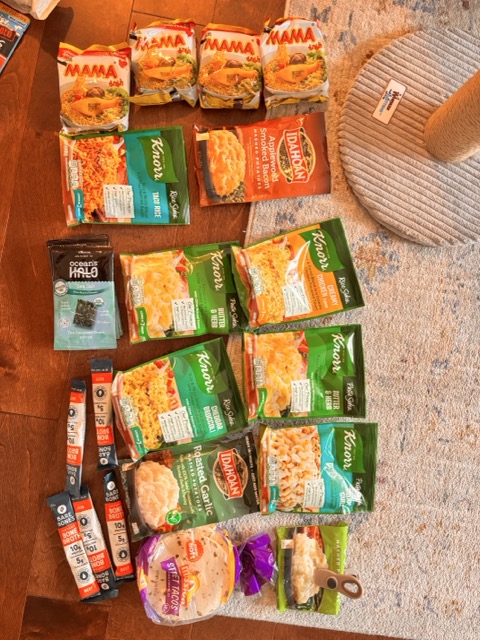
Carbohydrate bases: ramen, rice sides, mashed potatoes, tortillas, and easy dinner foundations.
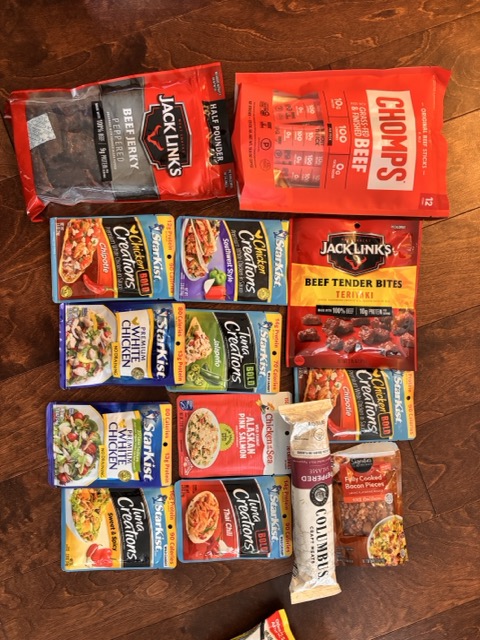
Protein add-ins: tuna, chicken packets, jerky, bacon bits, and sausage that upgrade simple meals fast.
Quick Planning Targets
| Category | Target |
|---|---|
| Daily calories I would actually carry | Roughly 2,000 to 3,000, depending on appetite and distance |
| Likely burn on a hard day | 4,000 to 6,000 |
| My actual strategy | Eat lighter, hike with less food weight, and accept some deficit |
| Optional boosters if needed | Olive oil, peanut butter, cheese, nuts, sausage |
| Best grocery-store strategy | Buy normal food, then optimize for shelf life, simplicity, and foods you actually want to eat |
Dinners
1. Knorr Pasta + Tuna
| Quick Fact | Details |
|---|---|
| Calories | About 550 to 750 |
| Cost | Around $5 |
| Why it works | Cheap, salty, easy, and satisfying without trying to become a calorie bomb |
| Ingredient | Amount | Notes |
|---|---|---|
| Knorr Pasta Side | 1 pack | Main base |
| Tuna pouch | 1 | Easy protein |
| Olive oil packets | Optional | Only if you actually want the extra calories |
| Parmesan packet | Optional | Nice extra salt and richness |
Cook the pasta side, stir in the tuna, and finish with parmesan if you have it. Add olive oil only if you want a bigger dinner.
2. Knorr Rice + Chicken
| Quick Fact | Details |
|---|---|
| Calories | About 650 to 850 |
| Cost | Low |
| Why it works | Filling, savory, and easy to customize |
| Ingredient | Amount | Notes |
|---|---|---|
| Knorr Rice Side | 1 pack | Main base |
| Chicken pouch | 1 | Protein |
| Taco seasoning | 1 small packet | Adds flavor fast |
| Hot sauce packet | To taste | Good morale upgrade |
Cook the rice, mix in the chicken and seasoning, and add hot sauce at the end.
3. Instant Ramen Deluxe
| Quick Fact | Details |
|---|---|
| Calories | About 500 to 850 |
| Cost | Very low |
| Why it works | Turns cheap ramen into a genuinely satisfying dinner without needing freeze-dried meals |
| Ingredient | Amount | Notes |
|---|---|---|
| Ramen packs | 1 to 2 | One if you want lighter, two if you want more food |
| Peanut butter packet | Optional | Adds body, but I would not force it every time |
| Sriracha packet | 1 | Heat and balance |
| Chicken pouch | 1 | Protein |
Cook the ramen, then stir in peanut butter, sriracha, and chicken until it turns into a richer noodle bowl.
4. Instant Mashed Potatoes
| Quick Fact | Details |
|---|---|
| Calories | About 600 to 850 |
| Cost | Low |
| Why it works | Fast, warm, comforting, and extremely easy after a long day |
| Ingredient | Amount | Notes |
|---|---|---|
| Idahoan potatoes | 1 pack | Main base |
| Bacon bits | To taste | Salt and texture |
| Cheese | Small handful | Melts in well |
| Chicken pouch | 1 | Protein |
| Butter powder or olive oil | Optional | Adds richness if you want it |
Make the potatoes, then fold in everything else while they are still hot.
5. Couscous Bowl
| Quick Fact | Details |
|---|---|
| Calories | Moderate, easy to scale slightly upward |
| Cost | Moderate |
| Why it works | Couscous only needs hot water and feels surprisingly fresh |
| Ingredient | Amount | Notes |
|---|---|---|
| Couscous | 1 serving | Fast base |
| Sun-dried tomatoes | Small handful | Strong flavor |
| Feta | Optional, first day | Best early in the trip |
| Salami | 1 serving | Fat and protein |
| Olive oil | Optional | Helpful, but not necessary |
Pour hot water over the couscous, let it sit, then stir in the other ingredients for a very Mediterranean trail dinner.
6. Mexican Rice Bowl
| Quick Fact | Details |
|---|---|
| Calories | About 650 to 850 |
| Cost | Low to moderate |
| Why it works | Filling and easy to make crunchy and satisfying |
| Ingredient | Amount | Notes |
|---|---|---|
| Instant Spanish rice | 1 pack | Main base |
| Dehydrated beans | 1 serving | Extra fiber and protein |
| Cheese | Small handful | Richness |
| Taco seasoning | 1 small packet | Flavor |
| Tortilla chips | Handful | Crunch on top |
Cook the rice and beans, stir in seasoning and cheese, then crush tortilla chips over the bowl.
7. Instant Curry
| Quick Fact | Details |
|---|---|
| Calories | About 600 to 800 |
| Cost | Moderate |
| Why it works | One of the best flavor-to-effort ratios on trail |
| Ingredient | Amount | Notes |
|---|---|---|
| Instant rice | 1 serving | Main base |
| Curry packet | 1 | Sauce and flavor |
| Chicken pouch | 1 | Protein |
| Cashews | Small handful | Fat and texture |
Cook the rice, add curry and chicken, and top with cashews at the end.
8. Mac and Cheese Upgrade
| Quick Fact | Details |
|---|---|
| Calories | About 750 to 950 |
| Cost | Low |
| Why it works | Extremely comforting, especially after a cold or wet day |
| Ingredient | Amount | Notes |
|---|---|---|
| Annie’s or Kraft mac and cheese | 1 box or pack | Main base |
| Chicken pouch | 1 | Protein |
| Bacon bits | To taste | Salt and richness |
| Cheese powder | Extra if available | Makes it even richer |
Cook the mac and cheese, then stir in the chicken, bacon bits, and extra cheese powder.
9. Instant Ramen Carbonara
| Quick Fact | Details |
|---|---|
| Calories | About 500 to 750 |
| Cost | Very low |
| Why it works | One of the best backpacking hacks if you want rich comfort food |
| Ingredient | Amount | Notes |
|---|---|---|
| Chicken ramen | 1 pack | Main base |
| Parmesan packet | 1 | Salty richness |
| Bacon bits | To taste | Texture and flavor |
| Olive oil | Optional | Use it only if you want a heavier dinner |
Cook the ramen, drain slightly, then stir in parmesan, bacon bits, and olive oil.
Breakfasts
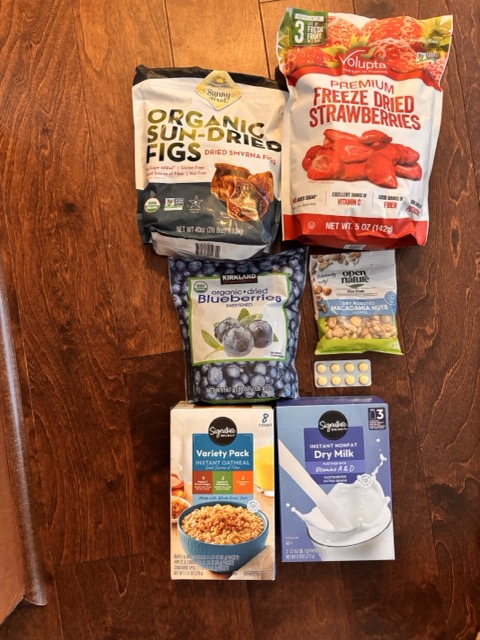
Breakfast staples: oatmeal, dried fruit, nuts, powdered milk, and simple morning calories that pack down well.
10. Oatmeal Deluxe
| Quick Fact | Details |
|---|---|
| Calories | About 400 to 650 |
| Cost | Low |
| Why it works | Reliable, warm, and easy to scale with nuts and milk powder |
| Ingredient | Amount | Notes |
|---|---|---|
| Instant oats | 1 large serving | Base |
| Dried blueberries | Small handful | Sweetness |
| Walnuts | Small handful | Fat and crunch |
| Brown sugar | To taste | Extra calories |
| Cinnamon | To taste | Easy flavor |
| Powdered milk | 1 serving | Creamier texture |
Add hot water, let it thicken, and then mix in the rest.
11. Bagel Bomb
| Quick Fact | Details |
|---|---|
| Calories | About 350 to 700 |
| Cost | Low |
| Why it works | No cooking, very portable, and great for fast mornings |
| Ingredient | Amount | Notes |
|---|---|---|
| Bagels | 1 to 2 | Main base |
| Peanut butter | 1 to 2 packets | Calories and protein |
| Honey | To taste | Fast sugar |
| Banana chips | Handful | Crunch and sweetness |
Split the bagel, spread peanut butter and honey, and add banana chips inside or eat them on the side.
Lunches
12. Charcuterie Lunch
This is one of my favorite backpacking lunches because you barely have to stop.
| Quick Fact | Details |
|---|---|
| Calories | Easy to keep moderate or push higher |
| Cost | Moderate |
| Why it works | No stove, no cleanup, and very little friction |
| Ingredient | Amount | Notes |
|---|---|---|
| Hard salami | 1 serving | Fat and salt |
| Sharp cheddar | 1 block or chunk | Great early and mid-trip |
| Crackers | 1 sleeve or bag | Easy carb |
| Summer sausage | Optional extra | Big calorie density |
| Trail mix | Handful | Dessert and backup calories |
This works best as a graze-style lunch you eat during short breaks rather than a formal stop.
13. Tortilla Wrap
| Quick Fact | Details |
|---|---|
| Calories | Moderate to high |
| Cost | Low |
| Why it works | Flexible, cheap, and durable in a food bag |
| Version | Ingredient | Amount | Notes |
|---|---|---|---|
| Sweet | Tortilla | 1 | Base |
| Sweet | Peanut butter | 1 packet | Fat and protein |
| Sweet | Honey | To taste | Fast calories |
| Savory | Tortilla | 1 | Base |
| Savory | Tuna | 1 pouch | Protein |
| Savory | Olive oil packet or mustard packet | 1 | Better trail option than mayo in hot conditions |
| Savory | Hot sauce | To taste | Flavor |
Both versions work well. The sweet version is better in cold weather mornings, and the savory one is great for lunch.
Snacks
Safeway usually has excellent snack options for hiking.
| Snack | Why Pack It |
|---|---|
| Peanut M&M’s | One of the best mixes of sugar, fat, and morale |
| Snickers | Dense, cheap, and reliable |
| Peanut butter pretzels | Great salty snack with decent calories |
| Beef jerky | Easy protein |
| Pistachios | Good fat and satisfying to eat slowly |
| Cashews | Very calorie-dense |
| Almonds | Reliable everyday trail staple |
| Reese’s Pieces | Fast sugar and fun |
| Clif Bars | Useful structured snack when you want something predictable |
| Nature Valley bars | Cheap and easy to find |
| Dried mango | Good change of pace from chocolate and nuts |
| Dates | Very dense fast energy |
| Fig bars | Simple, compact carbohydrate source |
Drinks and Caffeine
| Item | Why Pack It |
|---|---|
| Instant coffee | Morning morale |
| Tea bags | Great on cold mornings or for a calmer evening drink |
| Caffeine pills | Extremely weight-efficient backup if you want stimulation without carrying extra liquid mixes |
| Liquid IV | Easy electrolyte upgrade |
| Gatorade powder | Good for hot days and long climbs |
| Hot chocolate | Calories plus morale at camp |
| Apple cider packets | Warm, sweet, and good in cold weather |
Desserts
| Dessert | Why It Works |
|---|---|
| Instant pudding | Can be made thick and feels surprisingly luxurious |
| Oreos | Cheap, durable, and always welcome |
| Peanut butter cups | Dense and satisfying |
| Cookies | Easy extra calories at night |
My Ideal 4-Day Menu
This is roughly the pattern I would repeat over a four-day trip.
| Meal Slot | Default Choice |
|---|---|
| Breakfast | Instant oatmeal + coffee |
| Trail snacks | Nuts + M&M’s + beef jerky + Clif Bar |
| Lunch | Tortilla + salami + cheese |
| Afternoon snack | Peanut butter pretzels + dried fruit |
| Dinner | Knorr Pasta Side + tuna |
| Dessert | Hot chocolate + Oreos |
My #1 Tip: Do Not Force Calories
If I try to eat like I am replacing every burned calorie on a short section, I often end up carrying more food than I want and enjoying it less.
I would rather:
- Eat meals that sound genuinely good
- Keep the food bag smaller
- Accept the calorie deficit
- Add extra fat only when I actually want it
Optional Calorie Boosters
If you do decide you want a bit more food, these are still the easiest add-ins.
| Add-In | Approximate Calories | When I Would Use It |
|---|---|---|
| Olive oil packet | 120 |
When dinner feels too small |
| Peanut butter packet | 180 to 200 |
For breakfast, tortillas, or backup calories |
| Mixed nuts | 160 to 200 per ounce |
Easy to snack on if the day gets bigger |
| Cheese | Varies | Best on the first days when it still sounds good |
| Summer sausage | Varies | Useful if you want denser lunches |
None of these need to be automatic.
Bonus Idea: Dehydrate Your Own Meals
If you enjoy DIY projects, a food dehydrator is a great investment for regular backpacking.
You can make your own chili, spaghetti Bolognese, curry, lentil stew, or even scrambled eggs at home, dehydrate them, and simply rehydrate them on the trail.
The result is often:
- Tastier than commercial freeze-dried meals
- Healthier than many packaged options
- Cheaper over the course of a season
If you backpack regularly, the dehydrator can easily pay for itself.