Book summary
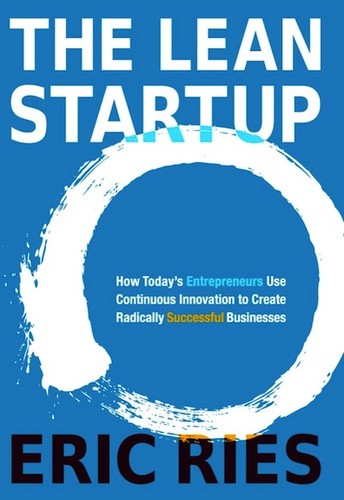
The Lean Startup
A build-measure-learn system for shipping products under uncertainty.
Summary
The Lean Startup treats a startup as an experiment under extreme uncertainty. Its purpose is not simply to build the original idea efficiently, but to discover a sustainable business model before time and money run out. Progress therefore means validated learning: evidence that the team’s assumptions about customers, value, and growth are correct.
The core mechanism is the Build–Measure–Learn feedback loop. A team creates the smallest minimum viable product that can test an important assumption, measures real customer behavior, and uses the result to decide what to do next. Speed matters because every shorter loop reduces uncertainty and prevents months of polishing something nobody wants.
Ries separates the value hypothesis—whether the product meaningfully helps customers—from the growth hypothesis—how new customers will discover and adopt it. Teams should track cohort behavior and experiments rather than vanity metrics such as total signups, which can rise while the underlying product remains weak.
Innovation accounting gives this learning process structure: establish a baseline with real data, run experiments intended to improve it, and then reach a clear decision point. If the evidence supports the strategy, persevere. If a central assumption is wrong, pivot by changing part of the product, audience, channel, or business model while preserving what the team has learned.
The broader lesson is to manage uncertainty explicitly. Small batches, direct feedback, and honest metrics make failure cheaper and insight faster. Lean is not about doing less work; it is about ensuring that each unit of work answers a question that matters.