Book summary
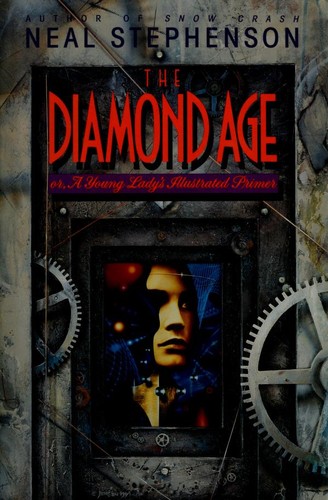
The Diamond Age
Summary
The Enduring Power of Education in a Nanotech Future
Neal Stephenson’s The Diamond Age is a visionary work that imagines a 21st-century revolution driven by molecular nanotechnology. Published in 1995, the novel presents a future where the ability to manipulate matter at the atomic level has fundamentally altered human existence, dissolving traditional governments and economies. Yet, amidst the flying cars and matter compilers, the story remains anchored in a deeply human concern: the upbringing of a child.
A World of Phyles and Matter Compilers
The novel is set in a future where the nation-state has largely collapsed. In its place, society has organized into “phyles” or tribes, groups bound by shared values, ethnic heritage, religion, or cultural similarities. These phyles operate as sovereign entities, often maintaining segregated enclaves within the same metropolis. They coexist under the Common Economic Protocol, a set of rules designed to facilitate economic interaction and protect property rights in a hyper-globalized world.
Technology sustains this new order through the Feed, a system analogous to the electrical grid that delivers streams of energy and basic molecules. Public matter compilers connected to the Feed can assemble these molecules into food, clothing, and other essentials on demand, often for free. While this has created a post-scarcity environment for basic needs, it has also rendered many traditional jobs obsolete. Consequently, a stark class divide exists. The “thetes”-individuals without tribal affiliation-live in squalor, entitled only to low-quality goods and free justice, while elite phyles like the Neo-Victorians enjoy high standards of living and cultural refinement.
The Primer: A Technological Marvel
The plot kicks into gear when John Percival Hackworth, a prominent neo-Victorian engineer, is commissioned by Lord Alexander Finkle-McGraw to create the Young Lady’s Illustrated Primer. Finkle-McGraw fears that his society has become too stagnant and indoctrinated. He wants a device that will educate his granddaughter to be subversive, to question the status quo, and to live an “interesting life.” The result is an interactive book powered by nanotechnology and artificial intelligence. It can sense its environment, converse with the reader, and tailor its narratives to teach precisely what the user needs to survive and thrive.
Hackworth, tempted by the device’s potential, creates an illegal copy for his own daughter, Fiona. However, the copy is stolen before he can deliver it. Through a circuitous journey involving muggers and black market engineers, the stolen book finds its way into the hands of Nell, a four-year-old thete living in the Leased Territories, a slum on an artificial island near Shanghai. Nell lives with a neglectful mother and abusive boyfriends, existing on the margins of this high-tech world.
Nell’s Education and the Role of Humanity
As Nell interacts with the Primer, it begins to spin fairy tales about a Princess Nell who must navigate trials involving castles and wicked stepmothers. These stories are metaphors for Nell’s real life, teaching her literacy, self-defense, and even programming. The Primer’s intervention allows Nell to escape her abusive household and eventually find refuge in Dovetail, an artisan phyle.
A crucial theme emerges through the parallel experiences of Nell, Fiona, and Elizabeth, the intended recipient. While all three girls have access to the Primer’s technology, Nell’s education is distinct because her copy is a “ractive”-an interactive narrative acted out in real-time by a human actress named Miranda Redpath. Miranda effectively becomes a surrogate mother to Nell through the digital interface, providing emotional support and genuine love that the machine alone cannot offer.
The novel distinguishes between intelligence and education, suggesting that while data can be downloaded, true intelligence-the ability to handle subtlety, ambiguity, and contradiction-comes from life experience and human reflection. The Primer provides the facts, but Miranda’s presence provides the emotional context that allows Nell to develop a healthy, resourceful mind. Stephenson posits that AI, referred to in the book as pseudo-intelligence, can never replicate the human soul or the rich complexities of human interaction.
The Geopolitics of Technology
While Nell grows up, the broader world is locked in a struggle between two distinct technological philosophies. The established order relies on the Feed, a centralized, hierarchical system of distribution controlled by the Neo-Victorians. In opposition, Dr. X, a leader of the Celestial Kingdom phyle, seeks to develop the Seed. The Seed represents an anarchic, decentralized technology that would allow anyone to be a source of creation, bypassing the Feed entirely.
Hackworth is caught in the middle of this conflict. Blackmailed by Dr. X for his role in creating the illegal Primer copy, Hackworth is forced to aid in the development of the Seed. He spends ten years submerged with the Drummers, a collective human network using orgiastic rituals to process data, essentially becoming a component of a vast biological computer. This narrative arc highlights the dangers of unrestricted technology-Dr. X justifies the crackdown on Seed technology by arguing it would lead to the proliferation of super-weapons and anarchy.
Tribalism and Moral Complexity
Stephenson uses this futuristic setting to explore the persistence of tribalism. A key passage in the novel asserts that individual cleverness is meaningless unless aligned with the collective efforts of a tribe. The world divides into tribes because individual efforts are otherwise swallowed up by the ocean of history. Characters constantly struggle to balance their loyalty to their immediate circle-friends and family-with their obligations to humanity at large.
This tension is not easily resolved. Stephenson does not offer unambiguous moral lessons but instead presents the “ineluctable frustrations” of human conduct. Characters must make difficult choices with consequences they may not fully endorse. Nell’s journey from a helpless thete to a leader of the Mouse Army-an army of abandoned Chinese girls-illustrates that survival often requires forging new tribes when old ones fail.
Conclusion: Technology as a Tool
Ultimately, The Diamond Age is a coming-of-age story wrapped in a treatise on nanotechnology. It suggests that while technology can provide the tools for survival and education, it is human connection and cultural cohesion that give life meaning. The Primer is a marvel, but it is the love of a surrogate mother and the solidarity of a new tribe that truly save Nell. In a world where matter can be programmed and goods are free, the most valuable resources remain relationships, subversive thought, and the ability to adapt to a changing reality.