Book summary
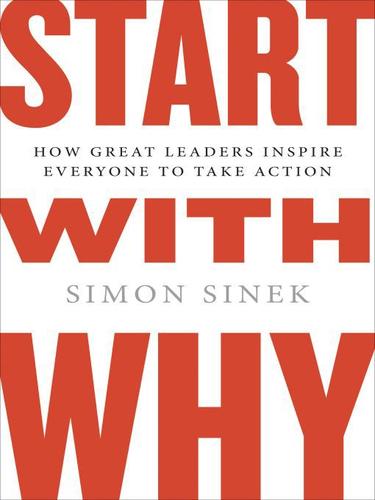
Start With Why
Why mission-led storytelling shapes loyal teams and customers.
Summary
The Core of Inspiration
Some organizations and leaders possess an ability to inspire deep loyalty. They command more than just transactional compliance from customers and employees; they command devotion. Simon Sinek argues that this loyalty stems from a single biological and organizational principle. Great leaders do not start with what they do. They do not even start with how they do it. They start with why.
This distinction is the foundation of Sinek’s Golden Circle framework. Most companies communicate from the outside in. They lead with their product, the What. They might mention their differentiator, the How. But they rarely articulate their purpose, the Why. In contrast, inspiring organizations like Apple, or leaders like Martin Luther King Jr., operate from the inside out. They lead with their purpose, their belief, and their cause.
The Golden Circle
Imagine a target with three rings. The outer ring is What. Every organization on Earth knows What they do. They make products or provide services. The middle ring is How. Some organizations know How they do it; this is their proprietary process or unique value proposition. The center ring is Why. Very few organizations know Why they do what they do. The Why is not about making money, that is a result. The Why is a purpose, a cause, or a belief. It is the very reason your organization exists.
Sinek argues that when we communicate from the inside out, starting with the Why, we are speaking directly to the part of the brain that drives decision making. When we start with What, we are speaking to the rational, analytical part of the brain. While facts and figures might inform a decision, they do not inspire action. It is the limbic brain, responsible for feelings like trust and loyalty, that dictates behavior. When a leader articulates a clear Why, they tap into this emotional center.
People Don’t Buy What You Do
There is a famous line in this book, “People don’t buy what you do; they buy why you do it.” This insight explains why some companies succeed despite having inferior resources or higher prices.
Consider the example of a computer company. If marketed from the outside in, a company might say, “We make great computers. They are beautifully designed and user friendly. Want to buy one?” This is a standard sales pitch.
Now consider how an inside-out communication sounds. “Everything we do, we believe in challenging the status quo. We believe in thinking differently. The way we challenge the status quo is by making our products beautifully designed and user friendly. We just happen to make great computers.”
The second pitch is reversed. It gives the audience a chance to identify with the belief. You are not buying a computer because of its features; you are buying it because of what it says about you. You are buying the representation of challenging the status quo. This is why customers are willing to pay a premium or stand in line for hours. They are not buying a product; they are buying their own values reflected back at them.
The Trap of Manipulation
Without a clear Why, companies often resort to manipulation to drive sales. Manipulation includes using price drops, fear tactics, peer pressure, or novelty to influence behavior. These tactics work. They can drive transactions and spike short-term numbers.
However, manipulation comes at a high cost. It does not breed loyalty. A customer bought through a price cut will leave for a cheaper competitor. An employee motivated by fear will leave as soon as the pressure eases. Manipulation leads to a cycle of repeated transactions that require increasingly more energy and resource to maintain.
In contrast, inspiration leads to loyalty. When people buy your Why, they are loyal to you, not your price or your features. This creates a sustainable business model. The goal is not to do business with everybody who needs what you have. The goal is to do business with people who believe what you believe. When you attract those who share your beliefs, you do not need to manipulate them. They are self-motivated to be part of your cause.
Fueling the Desire to Belong
This behavior is rooted in human biology. We have a deep-seated need to belong. We gravitate toward leaders and brands that make us feel like we are part of something bigger. Companies with the greatest loyalty often do not have the best metrics. They may not have the fastest service or the lowest price. But they succeed because they give people a way to show the world who they are and what they believe in.
For example, flying a certain airline or wearing a specific shoe brand becomes a symbol. It is a badge of identity. When customer and company become one and the same in their values, a logo has become a symbol. This emotional bond creates a trust that allows organizations to weather mistakes that would destroy a purely transactional company.
Trust and Consistency
Trust is not a checklist. It is not earned through a series of good deeds alone. Trust is a feeling. It emerges when the people inside an organization feel protected by a strong culture and a clear sense of purpose.
Sinek notes that great organizations become great because of the people inside them. When there is a strong and inspired culture, employees feel safe. They feel they belong. This sense of safety allows them to focus their energy on innovation and service rather than internal politics. You cannot manufacture this culture memos. You can only build it by being authentic.
Consistency is the bridge here. The only way others know what you believe is from the things you say and do. It takes consistency to relieve them of any doubt. If you claim to have a noble Why but your actions contradict it, trust erodes. Every decision, from strategy to daily operations, must reflect the Why.
Early Adopters and the Tipping Point
You do not need to convince everyone to follow you. The law of diffusion of innovation suggests that mass market success is only achieved after you capture the early adopters.
Early adopters are the innovators and visionaries. They make up a small portion of the population, but they are different. They rely on their intuition. They will make decisions based on their values and beliefs, often before the proof is available. They are the ones who will stand in line for a new product or support a movement when it is just an idea.
If you focus on capturing these early adopters with your Why, they will do the heavy lifting for you. A personal, trusted recommendation from an early adopter has the capacity to trump facts, rational thinking, and massive advertising budgets. If you can get your Why into the hands of enough of these true believers, the majority of the population will eventually follow. This is the difference between a passing fad and an idea that changes society forever.
Leadership Requires a Clear Why
Effective leadership is not about being in charge. It is about taking care of those in your charge.
Sinek uses the Golden Circle to describe the internal structure of an organization as well. The CEO sits at the top of the cone representing the Why. They are the visionary. Below them are senior executives who know the How, the systems and processes required to bring the vision to life. The base of the cone is the What, where the bulk of employees create tangible results.
For this system to work, there must be mutual respect. Those who know Why need those who know How, and vice versa. A visionary without a team to execute is just a dreamer. A team of operators without a Why is just a machine.
Sinek highlights that this dynamic often shows up in the story of the Wright brothers. They had no money, no fame, and no college education. Yet they beat the government-backed Samuel Langley to powered flight. Why? The Wright brothers were driven by a cause. They wanted to change the world. Langley wanted to be rich and famous. The Wright brothers had a team of believers who worked with passion. Langley had hired employees who worked for a paycheck.
The Succession Challenge
A critical challenge for mission-led organizations is succession. A founder often embodies the Why. They are the living symbol of the company’s purpose.
Sinek warns that when a charismatic or visionary leader leaves, the company often loses clarity of its Why. Without the originator, the focus shifts to the What. The company starts listening to shareholders rather than its gut. It starts competing against everyone else rather than against itself. Sinek notes that when you compete against everyone else, no one wants to help you. But when you compete against yourself, everyone wants to help you.
To survive, the founder’s Why must be well integrated into the company culture. It must be codified in values and rituals so that it thrives after the founder departs. Part of a CEO’s job is to personify the purpose of the organization so well that it becomes self-sustaining.
Finding Your Why
For those looking to apply these ideas, the path requires reflection. Finding your Why is a struggle. It requires looking inward, often through trial and error, to discover the one word or phrase that represents your contribution to the world and the impact you want to have.
You can start by looking at your past. What were the moments you felt most fulfilled? What were you doing when you felt most like yourself? You can also ask, “If my company or I ceased to exist tomorrow, what would be lost? What missing hole would the world feel?”
Once you find your Why, you must protect it. You must be willing to make decisions that uphold your purpose, even if they are painful in the short term. Sinek points out that sometimes you have to turn down business. Sometimes you have to say no to a partnership.
Conclusion
In a world full of noise and manipulation, starting with Why is a differentiator. It is a way to cut through the competition and connect on a human level. It creates trust, loyalty, and innovation. Whether you are a leader of a massive corporation or an individual looking for more motivation, the principle remains the same. When your Why is clear, your How becomes easier and your What becomes more successful.