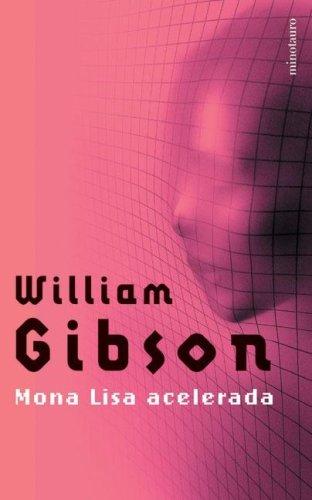
Book summary
Mona Lisa Overdrive
Summary
The Ecosystem of the Sprawl
William Gibson’s Mona Lisa Overdrive serves as the final chapter in the Sprawl trilogy, a series that defined the cyberpunk genre. Set in a dystopian future where the eastern seaboard of the United States has metastasized into a single, toxic urban mass known as the Sprawl, the novel illustrates a world where technology has failed to liberate humanity. Instead, it has deepened the divide between the powerful and the powerless.
The novel does not rely on a single protagonist but instead weaves together four distinct narrative threads. Gibson masterfully constructs a thriller that feels less like a traditional story and more like a collision of disparate lives. The central theme is the convergence of flesh and data. In this world, bodies are merely vessels to be repurposed, and consciousness is no longer confined to biological limits. The Sprawl itself is presented not just as a city, but as a self-sustaining organism composed of capital, media, infrastructure, and decay. This ecosystem consumes everyone within it, from the glamorously wealthy to the destitute.
The Commodity of Appearance
One of the most striking storylines follows Mona, a teenage prostitute from Florida who possesses a striking resemblance to Angie Mitchell, a superstar of the simstim realm. Simstim, or simulated stimulation, allows users to experience the sensory input of another person, making Angie one of the most famous women in the world. Mona’s life of exploitation takes a drastic turn when a criminal syndicate recruits her for a “gig.” She undergoes extensive cosmetic surgery to become a physical double of Angie.
This plot thread explores the instability of identity in a world where appearance can be manufactured for profit. Mona is not asked to act; she is asked to disappear into someone else’s symbolic body. Her transformation is a violation, a coerced surrender of her selfhood to serve the commercial interests of others. Through Mona, Gibson illustrates that in a media-saturated society, the self is often mediated by images controlled by external forces. Privilege and opportunity look like salvation for Mona, but they function as a beautifully furnished prison where she is expected to perform a role she did not choose.
The Surveillance of Fame
Parallel to Mona’s story is that of Angie Mitchell herself. While she lives a life of luxury and fame, she is trapped in a gilded cage of surveillance. Her father, a scientist, altered her brain in childhood to allow her to access cyberspace directly, without a “deck.” This ability made her a star, but it also made her a valuable asset controlled by her production company, Sense/Net.
Angie struggles with addiction to designer drugs supplied by her own handlers, drugs intended to alter her brain chemistry and limit her ability to interface with the artificial intelligences inhabiting the matrix. Her journey through rehab and her attempt to break free from these controls highlight the theme that power is often a more intimate form of vulnerability. Despite her immense privilege, Angie lacks agency over her own mind and body. Her narrative underscores the idea that security without agency is merely dependency.
Art in the Wasteland
In a desolate area of the Sprawl known as the Dog Solitude, a collection of abandoned factories and toxic dumps, lives Slick Henry. A convicted car thief, Slick was punished by having his short-term memory erased every five minutes. The dissociation he suffers drives him to create giant, robotic sculptures as a way to externalize his anger, fear, and trauma.
Slick’s storyline introduces a third major theme: creation as an act of survival. In a place where ordinary life has broken down, building things becomes a necessary mechanism for psychological endurance. Slick’s quiet existence is disrupted when an acquaintance coerces him into hiding a comatose man in his warehouse. This man is Bobby Newmark, also known as the Count Zero, the hacker boyfriend Angie left behind. Bobby is jacked into an Aleph, a massive biochip of immense capacity containing an approximation of the entire matrix. He exists in a state of suspended animation, his consciousness roaming the data streams while his body dies.
The Ghost in the Machine
The fourth thread follows Kumiko, the young daughter of a Yakuza boss. Sent to London to escape a gang war, she is accompanied only by a biochip named Colin. Colin is an AI unit that presents itself as a polite British child, offering Kumiko companionship and guidance in a foreign land. Kumiko’s narrative explores the sense of alienation in a globalized world. She grapples with her fragmented identity and the realization that technology, while advanced, cannot fully bridge the cultural and personal losses she experiences.
Through Kumiko, Gibson also delves into the spiritual implications of artificial intelligence. The AIs in the matrix have taken on the personas of loa, or Voodoo gods. This reflects a human tendency to deify poorly understood technology. hackers and users alike treat these digital entities as mystical forces, creating a new form of religion based on the worship of the network.
The Convergence of Threads
The novel’s brilliance lies in how these disparate threads are pulled together. A complex plot involving corporate espionage, revenge, and the evolution of the matrix drives the characters toward the Dog Solitude. Molly Millions, a razor-fingered mercenary from the previous novels who is now operating under the alias Sally Shears, works to unravel a conspiracy orchestrated by 3Jane, a deceased entity residing in the matrix. 3Jane, jealous of Angie’s abilities, seeks to kidnap her and replace her with Mona.
Molly intervenes, rescuing both Angie and Mona and transporting them to Slick Henry’s factory. There, the physical and digital worlds collide. Angie is directed by the loa to reunite with Bobby. With her body failing and the promise of a new existence in the Aleph, Angie chooses to upload her consciousness permanently. She and Bobby merge their minds within the biochip, leaving their bodies to die. In a twist of fate, having already been surgically altered to look exactly like Angie, Mona steps into the void left by the star and assumes her life of fame.
The Post-Human Future
The conclusion of Mona Lisa Overdrive suggests a transfiguration of humanity. Angie and Bobby do not die in the traditional sense; they move into a synthetic reality. The Aleph, a reference to a point in space that contains all other points, symbolizes the infinite potential of data. The novel ends with the prospect of this biochip making contact with an alien artificial intelligence near Alpha Centauri, a development hinted at since the first book.
Gibson leaves the reader contemplating what remains human when reality becomes programmable. The characters who survive-Mona as the new Angie, Molly free of her criminal record, and Slick finding a new path with Cherry, the nurse who cared for Bobby-all must navigate a world where identity is fluid. The final message is a critical observation of modern life: mediated fame, networked power, and synthetic desire are reshaping the human condition. As flesh and data converge, the definition of the self is no longer fixed, but rather a negotiable, editable construct available to the highest bidder.