Book summary
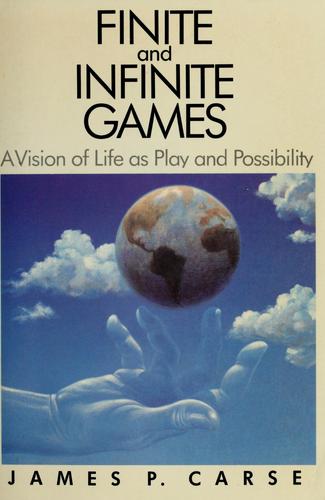
Finite and Infinite Games
Summary
The Game of Life: Finite and Infinite Perspectives
At the heart of human experience lies a fundamental choice regarding how we engage with the world. James Carse, a professor of history and religious literature, suggests that there are at least two kinds of games: finite and infinite. A finite game is played for the purpose of winning, while an infinite game is played for the purpose of continuing the play. This simple distinction serves as a powerful lens through which we can view everything from sports and politics to our careers and relationships.
Finite games are characterized by their structured nature. They have known players, fixed boundaries, agreed-upon rules, and definitive time frames. Examples include a football match, a chess tournament, a job interview, or a war. The objective is clear: to win the title, rank, or recognition. In these scenarios, the end of the game is just as important as the play itself. In fact, the finite player plays to end the game by defeating an opponent. The rules are contractual terms that allow players to agree on who is the winner, and these rules remain fixed until the game is concluded.
In contrast, infinite games have no spatial or temporal boundaries. The players may be known or unknown, and the rules are fluid, changing during the course of play to ensure the game continues. Examples of infinite games include culture, conversation, marriage, lifelong learning, and business evolution. The goal is not to win but to keep everyone playing. For the infinite player, the only purpose is to prevent the game from coming to an end. Consequently, the rules of an infinite game are changed to prevent anyone from winning and to bring as many persons as possible into the play.
The Freedom to Play
A crucial insight in Carse’s philosophy is the inherent freedom required for play. “Whoever must play, cannot play.” This principle applies to both finite and infinite games. If a game is forced, it ceases to be play and becomes drudgery or obligation. Finite players often voluntarily surrender this freedom, becoming convinced that the roles they have chosen are dictates they must follow. A lawyer, for instance, chooses the profession but may later feel forced to argue a case they do not believe in, forgetting their initial freedom to enter the role.
Finite players play within boundaries, accepting the limitations as necessary to achieve victory. Infinite players, however, play with boundaries. They see boundaries not as walls but as points of departure. This distinction is often captured as the difference between a boundary and a horizon. A boundary defines what is excluded, while a horizon defines the scope of vision and moves as one moves toward it. Infinite players are always oriented toward the horizon, seeking to extend the play and incorporate new possibilities.
Titles, Power, and the Past
Finite games are fundamentally concerned with titles. These titles are static labels that point backwards in time, recognizing what a person has already achieved. Power, in the finite sense, is the ability to control others to secure these titles. However, this power is always relational; it requires an audience to validate the title. Without others to recognize it, a title is meaningless. Finite players are often theatrical, performing roles to please an audience and acquire validation.
Infinite players, on the other hand, are not interested in titles or power over others. They exhibit strength, which Carse defines as the ability to allow others to play as they wish. While the finite player looks backward to past glories, the infinite player looks forward to future possibilities. Infinite players do not avoid finite games; they may participate in jobs or competitions, but they do so with a playful attitude, understanding these moments are just parts of the larger infinite game. They do not let the seriousness of the finite game overshadow the joy of continuing the infinite play.
Society vs. Culture
Carse extends this dichotomy to the structure of human groups. Society is defined by its boundaries. It creates order through titles, laws, and rigid definitions of who is in and who is out. To justify its existence and the power of its leaders, a society often needs an enemy. Without opposition, there is no need for the strict hierarchy that defines a society. This dynamic is visible in politics and nationalism, where the preservation of the state often takes precedence over the well-being of the individual.
Culture, however, is defined by its horizon. It is a creative, open-ended activity that seeks to include rather than exclude. Culture is dramatic rather than theatrical; it is about the ongoing creation of meaning rather than the re-enactment of a script. While a society can be suppressed, culture cannot be destroyed because it is not a static product but a living process. The infinite player operates within the realm of culture, constantly adjusting the rules to ensure that everyone can participate in the ongoing drama of life.
Training versus Education
Our approach to learning also reflects these two modes. Training is finite. It is based on a fixed framework and has a specific end goal. Training prepares us for a predictable future by drilling us in the past. It regards the past as finished and the future as something to be finished. Education, however, is infinite. It is a process of self-discovery that continues indefinitely. To be educated is to be prepared for surprise. The trained person fears surprise because it disrupts the plan, but the educated person welcomes surprise because it offers an opportunity to learn and grow.
The joy of infinite play lies in starting something we cannot finish. It is the laughter of discovery and the willingness to embrace the unknown. Finite players view life as something to be won, possessed, or secured against threats. They play to live. Infinite players live to play. They offer their lives to the game, understanding that death is not a defeat but a natural part of the infinite continuity. In the infinite game, death is not an end but an achievement, a moment in the ongoing play that transcends the individual lifespan.
The Choice of Play
Ultimately, Carse argues that we are not victims of circumstance but participants in the games we choose. We can turn seemingly infinite activities, like raising children or building a business, into finite games by imposing rigid rules and demands for specific outcomes. For example, treating a child as a project to be molded into a doctor turns parenting into a finite game of control. Conversely, treating parenting as an infinite game of relationship allows the rules to evolve as the child grows.
We have the agency to choose our attitude toward life. We can view our interactions as battles to be won or as opportunities to continue the conversation. By adopting the mindset of an infinite player, we free ourselves from the anxiety of status and the fear of losing. We realize that while finite games offer rewards of status and wealth, the infinite game offers something sublime: a life of continued play, creativity, and endless possibility. We are the geniuses of ourselves, the composers of our own actions, constantly writing a story that has no final chapter.